
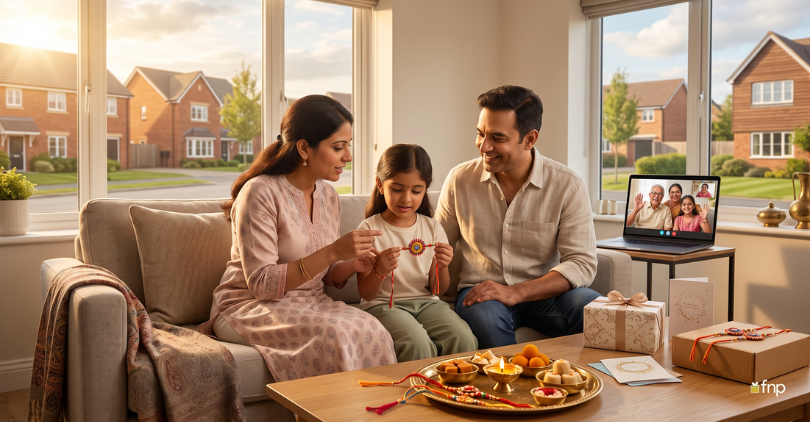
Raising a child in Houston, London, or Sydney comes with a quiet challenge. How do you pass down a festival your child has never seen celebrated at home? For families who moved abroad before their kids were born, Raksha Bandhan often exists only as a story. Sometimes it’s a video call. Sometimes it’s a rakhi to USA package that arrives once a year with little explanation attached. The good news is that the significance of Raksha Bandhan doesn’t have to get lost in translation. It just needs to be taught a little differently than it was taught to us.
Start With the Story, Not the Ritual

Kids don’t connect with rituals they don’t understand the reason for. Before you hand a child a thread and ask them to tie it on their cousin’s wrist over video call, tell them why the thread exists at all. The legend of Draupadi tearing her sari to bandage Krishna’s finger is a good place to start. So is the tale of a queen sending a rakhi to a king, asking him for protection. Children remember stories far longer than instructions. Once they know the “why,” tying the thread stops feeling like a chore. It starts feeling like taking part in something bigger than themselves.
Make the Thread Tangible
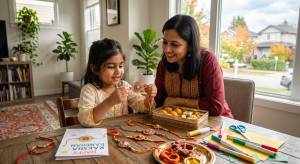
For a child that has never experienced having his whole bunch of cousins gathered together during the festival, the concept may seem to be theoretical in nature. Try bringing in the tangible rakhi to your home long before the day arrives. Allow the kid to feel the rope and even ask questions related to it. Nothing could replace it better than a thousand explanations in words. Try allowing your child to assist you in picking some sweets along with the gift, or make a card along with it. The point is not about recreating India at your home.
Let Them Choose the Rakhi

If your child has a brother or cousin living away from the house and wants to participate in the event, then involve him/her in choosing the rakhi. Scroll down a variety of designs available online and ask your child which one of them he/she thinks that his/ her brother or cousin would like the most. It will not just bring the tradition from the parents’ domain to your child’s one, but also prompt a conversation regarding the reason why siblings should exchange such a gift.
Turn the Distance Into Part of the Lesson
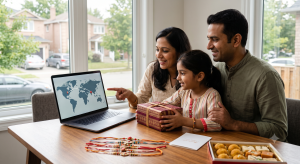
One of the things that second-generation children may not understand is the amount of effort that families take to ensure this festival stays alive despite distances. Point out that the rakhi needs to come all the way from India. Highlight the fact that the family makes sure that the rakhi international rakhi delivery is set on a scheduled date. This will teach the child one thing, that love takes some planning and even logistics at times. Children who help trace the package, or wait by the door for it to be delivered will find themselves far more connected to this day than children who are just given the rakhi without any explanation behind it.
Build a Yearly Tradition Around It

It is the consistency in traditions rather than occasional gestures that make the biggest impact on a child’s identity. Choose a couple of small actions to carry out every year, no matter how full your schedule is. Call your grandparents immediately after the ceremony through a video call. Prepare a small sweet in the kitchen. Write a message that goes along with the gift. The traditions become part of your child’s identity when repeated annually. Over time, these small habits anchor a child’s sense of heritage more than any single explanation ever could.
Talk About What the Thread Actually Means

Besides the candies and presents, it might be useful now and then to actually sit down and discuss straightforwardly what the occasion means. It is a pledge of protection. It is a connection which remains unbroken despite distances. It is a relationship which does not depend on being close together on a daily basis. Children of the second generation usually know everything about the holidays of their host countries but understand nothing of their own culture beyond the surface layer. An easy discussion, not turning it into a lesson in history, goes a very long way towards giving the day a meaning of its own, and not just following the ritual. You do not have to explain every nuance in a single discussion. The key is to come back to it again and again every year, until it becomes meaningful bit by bit instead of explained once and forgotten.
It would also help if children realized that this is not some private family tradition, but a holiday observed by millions of other families in similar conditions all around the world – scattered in similar cities, struggling with time zone differences and last minute search for presents.
Distance shouldn’t decide how well a child understands where they come from. Whether your family sends a rakhi to canada, ships one abroad, or ties it in person this year, the goal is the same. Help your child feel the meaning behind the thread, not just the motion of tying it. Raised right, this understanding of the Significance of Raksha Bandhan becomes something second-generation kids carry forward on their own, long after they’ve stopped needing a parent to explain it to them.


