
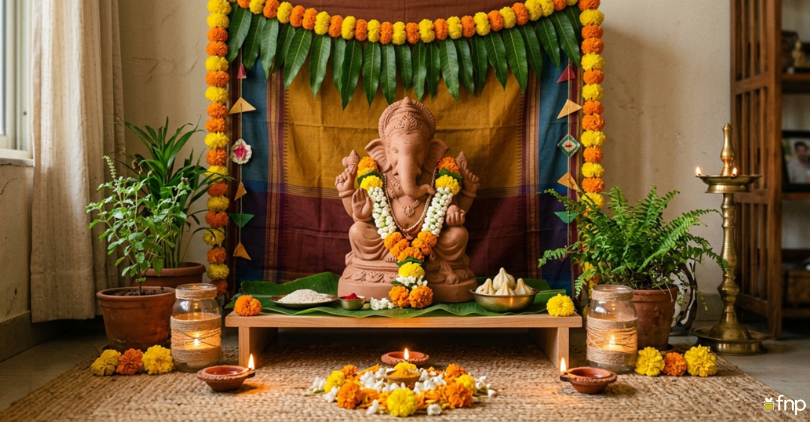
Every year around Ganesh Chaturthi, the same question comes up in most households. Do you go with the usual thermocol and plastic decor that’s quick to put up, or do you spend a bit more effort on something that won’t end up in a landfill the week after visarjan. More families are leaning toward the second option lately, and honestly, it doesn’t take much extra work. Eco-Friendly Ganpati Decoration Ideas have gotten a lot easier to pull off at home, mostly because so many of them use things you probably already have lying around.
The shift isn’t just about guilt over plastic waste either, though that’s part of it. Natural materials like flowers, leaves, clay, and cloth genuinely look better in photos too, warmer tones, more texture, less of that shiny synthetic look that thermocol decor tends to have. There’s also a practical side to it. Most of these materials are things you can source locally, sometimes from your own garden or the nearest flower market, rather than ordering plastic decor online and waiting for it to arrive a day before the festival starts. If you’re setting up a small mandap at home this year, here’s where to start.
Simple Easy & Eco-Friendly Ganpati Decoration Ideas You Can Try at Home
Clay Or Plantable Ganesh Idol
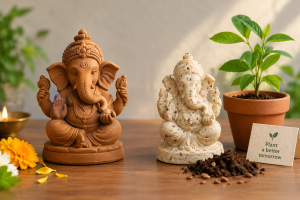
A clay or plantable Ganesh idol is the obvious starting point, since the decoration around Bappa matters less if the idol itself dissolves into microplastics during visarjan. Clay idols are widely available now, and some come embedded with seeds so the idol can be planted after the festival instead of immersed. It’s a small switch but it sets the tone for everything else you decorate with.
Marigold And Mogra Garlands
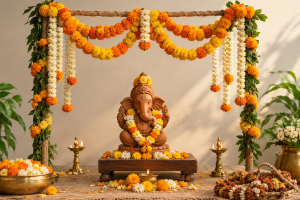
Marigold and mogra garlands do most of the heavy lifting once the idol is in place. Fresh flower garlands strung across the mandap, or woven into a simple archway using jute rope as the base, give the whole setup an instant festive feel without needing paint, glitter, or anything synthetic. If fresh flowers aren’t practical where you live, dried flower garlands work as a decent middle ground and last the full festival without wilting.
Mango Leaf Toran
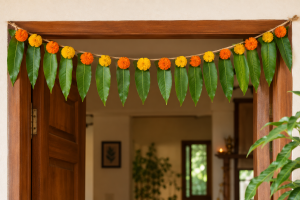
A mango leaf toran hung above the entrance is one of the easier traditional touches, and it takes maybe ten minutes to string together if you’ve got access to a few branches. Threading the leaves with marigold buds in between makes it feel a bit more finished without much extra effort.
Diyas And Terracotta Lamps
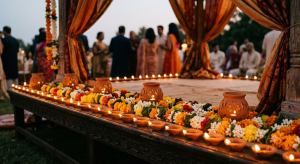
Diyas and terracotta lamps are worth leaning into instead of string lights this year. A row of clay diyas along the edge of the mandap, or a few terracotta lamps tucked between flowers, gives off a warmer glow than LED fairy lights and skips the plastic and batteries entirely. If you already have old diyas from Diwali, this is a good excuse to bring them back out.
Banana Leaf Backdrop
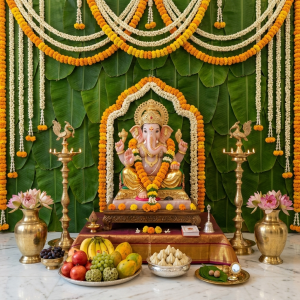
A banana leaf backdrop works surprisingly well if you want something a bit more dramatic behind the idol. Overlapping large banana leaves against a bamboo frame, or even just pinned to a wall, creates a natural green backdrop that flowers and lights show up beautifully against.
Recycled Paper Decoration
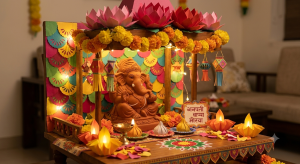
Recycled paper decorations are worth considering if you’ve got kids at home who want to help out. Origami lotus flowers, paper garlands, or cut-out designs using old newspaper or leftover chart paper cost nothing and give younger family members something to contribute beyond just watching the adults set things up.
Cloth Backdrop
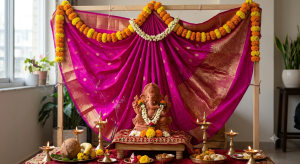
A reused dupatta or cloth backdrop is an easy swap if you’d normally buy a printed banner. Draping a bright saree or dupatta behind the idol, pinned at the corners, gives you a rich fabric backdrop that can be reused for other festivals later instead of thrown away after one use.
Natural Rangoli
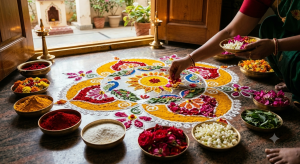
Natural rangoli made with turmeric, kumkum, rice flour, and flower petals instead of synthetic colours is another straightforward switch. It takes roughly the same amount of time as regular rangoli powder, and it looks just as vibrant, sometimes more so, once flower petals are worked into the pattern.
Lamps Or Candle Holders
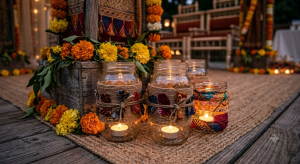
Upcycled glass jars turned into lamps or candle holders add a nice finishing touch around the base of the mandap. Wrapping old jars with jute thread or a strip of leftover fabric and placing a tea light inside gives you soft ambient lighting without buying anything new.
Small Potted Plants
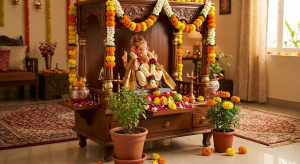
A few small potted plants placed around the mandap round things off nicely, tulsi, money plant, or marigold in small pots work well here. They double as decoration during the festival and stay useful in the house long after Ganpati’s gone home.
A Quick Note on Sourcing Sustainably
One thing worth mentioning is that eco-friendly doesn’t have to mean doing everything yourself from scratch. A lot of the heavier lifting, clay idols, fresh garlands, terracotta lamps, can be sourced ready-made now without much hunting around, and it’s worth checking what’s available before assuming you need to build everything by hand. If you’d rather skip the DIY entirely and still want the same sustainable feel, browsing a good collection of ganesh chaturthi gifts often turns up idols, diyas, and decor pieces that are already eco-conscious, without needing to source and assemble each element separately. This works particularly well if you’re short on time but still want the finished setup to feel considered rather than thrown together at the last minute.
What happens after the festival
It’s also worth thinking about what happens after the festival, not just during it. A lot of eco-friendly decor, terracotta lamps, cloth backdrops, potted plants, isn’t single-use the way plastic decor tends to be. Diyas get ganesh chaturthi giftsreused the following Diwali, a dupatta backdrop goes back into the wardrobe. None of it needs to be thrown out the day after visarjan, which is a small but genuinely useful side effect of going the natural route in the first place.
What actually makes a setup memorable isn’t how expensive it looks, it’s whether the effort behind it is visible. A mandap built from flowers, clay, and leaves tends to feel warmer and more personal than one wrapped in plastic sheeting and synthetic flowers, and it has the added benefit of not sitting in a landfill for the next few hundred years. Whichever combination of these ideas you go with, the point isn’t perfection. It’s welcoming Bappa home in a way that doesn’t leave much behind once he’s gone.


