
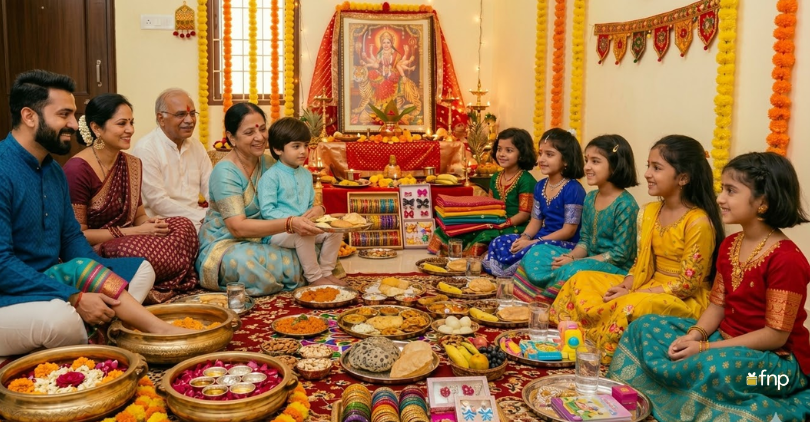
Kanjak is a cherished Hindu tradition. Young girls are worshipped as living embodiments of Goddess Durga. This beautiful ritual involves inviting nine young girls into your home during the auspicious days of Navratri, each representing one of the nine forms of the divine feminine.
The kanjak meaning goes beyond a simple ceremony. It’s a profound acknowledgment of shakti, the divine feminine energy that pervades the universe. During Navratri, we celebrate the triumph of good over evil through Goddess Durga’s victory. Kanjak serves as a formidable reminder that this divine energy resides in every young girl.
The tradition connects the spiritual significance of Navratri with practical expressions of reverence. By honoring these young girls with the same devotion shown to the Goddess herself, families invite blessings into their homes. Start by understanding this deeper meaning before you plan your celebration.
Why Do We Celebrate Kanjak During Navratri?
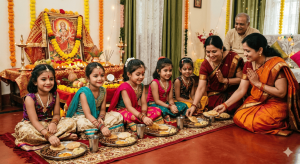
The spiritual significance of Kanjak lies in recognizing young girls as pure manifestations of Goddess Durga’s divine power.
Kanjak is observed on Ashtami or Navami of Navratri. These are the eighth and ninth days, marking the grand culmination of nine days of fasting and devotion. This timing holds exceptional importance as these are considered the most auspicious days when the Goddess’s energy reaches its peak. Families believe serving these young girls brings blessings. When you feed a kanjak with love, you’re directly serving the Goddess herself.
This act of selfless service is believed to remove obstacles, bring prosperity, and fulfill wishes while strengthening one’s spiritual connection with the divine feminine. Consider which day suits your family schedule best.
The Beautiful Rituals of Kanjak Puja
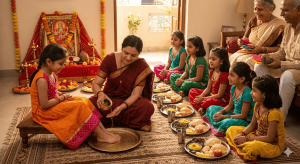
The Kanjak ceremony begins with washing the feet of the young girls. Family members gently wash the girls’ feet as a gesture of deep respect. They treat them as they would the Goddess herself. After this reverent welcome, the girls are seated for a feast.
The classic prasad includes hot puris, spiced black chickpeas, sweet halwa made with semolina, and an assortment of seasonal fruits. This meal is prepared with utmost devotion. The ceremony concludes with offering gifts to each girl.
Families present new clothes, hair accessories, or bangles. Before the girls leave, they receive blessings. A small monetary gift is placed respectfully in their hands. The entire ritual creates a memorable experience that honors both tradition and the precious young participants.
Prepare your prasad ingredients a day ahead. This allows you to focus on the ceremony itself. The ritual becomes smoother when you’re not rushing between the kitchen and the puja area.
Thoughtful Navratri Gifts for Kanjak Celebrations
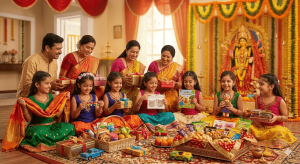
Choosing the perfect navratri gifts for Kanjak makes the celebration even more memorable for the young girls. Classic options include beautiful ethnic wear like colorful dupattas, hair accessories adorned with flowers, and decorative bindis. These make the girls feel truly cherished. For a more contemporary approach, consider age-appropriate books that inspire learning.
Engaging toys that spark creativity work wonderfully too. Beautifully curated gift hampers containing sweets are delightful choices that girls treasure. The key is selecting quality items that reflect the significance of the occasion.
Well-chosen gifts show thoughtfulness. They make each girl feel valued. Whether classic or modern, your gifts should convey warmth. Today, convenient gifting options make celebrations easier.
Online platforms allow you to select meaningful presents without the last-minute rush, ensuring that your celebration remains focused on devotion rather than stress. Browse gift collections at least a week before Navratri to avoid disappointment.
The Deeper Significance: Teaching Values Through Kanjak
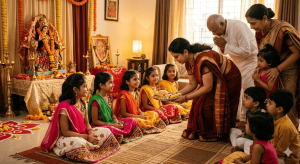
Beyond its religious importance, Kanjak serves as a robust social message promoting respect for women in society. By treating young girls as divine beings worthy of worship, the tradition instills values of gender equality from an early age.
It teaches reverence for the feminine. The ritual teaches essential values of humility and service. When family members bow before young girls, they learn that true devotion requires setting aside ego.
This act of selfless service cultivates compassion in both the givers and receivers. Kanjak also strengthens family bonds during Navratri. Approachable neighbors’ daughters creates substantial relationships.
Involving extended family brings everyone together. Children who participate in or witness Kanjak grow up understanding the importance of honoring others and celebrating the divine in everyday life. Make this a family affair by involving everyone in the preparations.
Celebrating Kanjak with Joy and Devotion
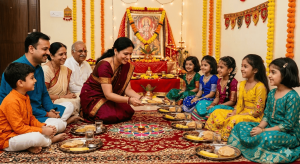
As you prepare for Kanjak this Navratri, embrace the tradition with genuine warmth. Remember that the ritual’s true beauty lies in the sincerity of your intentions. The love with which you serve matters most. Kanjak holds profound importance in honoring the divine feminine energy that sustains our world. Through this beautiful tradition, we acknowledge that the Goddess’s power manifests in the innocence of young girls, reminding us to respect the feminine in all its forms.
Thoughtful preparation makes all the difference in creating a memorable celebration. From selecting quality gifts to preparing delicious prasad with care, every detail contributes to making the occasion worthwhile for the young participants. When families invest time into these preparations, the celebration becomes more sizable for everyone involved. Begin your planning now to ensure a smooth and blessed Kanjak ceremony that honors this sacred tradition.
May this Navratri bring you abundant blessings. May your Kanjak celebration be filled with devotion, laughter, and the divine grace of Goddess Durga. Wishing you a blessed Navratri!