
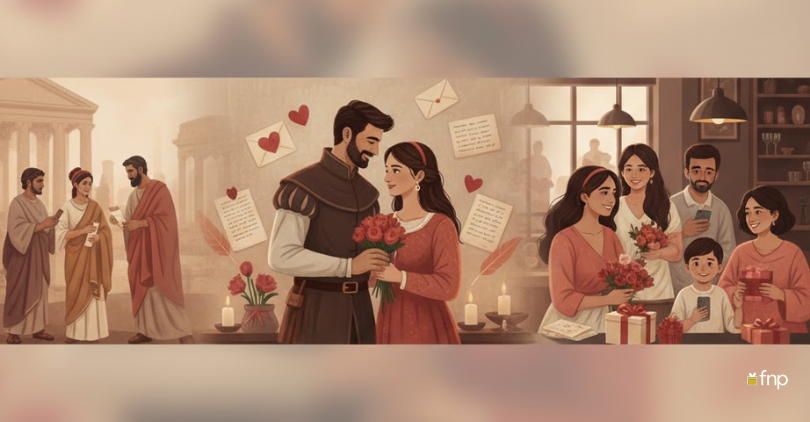
Valentine’s Day today is often imagined as a blur of red roses, heart-shaped chocolates, candlelit dinners, and carefully chosen presents. For many, it is a day marked on the calendar for expressing affection through gestures that feel almost ritualistic, flowers delivered at work, messages sent at midnight, and thoughtfully wrapped surprises. Yet beneath this familiar celebration lies a long and layered past. Few pause to ask what the day originally stood for, or how it evolved into its modern form. To understand that transformation, it helps to look closely at the history of Valentine and how social, cultural, and economic shifts reshaped it over centuries.
A Brief Look at the History of Valentine’s Day

The history of Valentine’s Day did not begin with giving out greeting cards or chocolates. Its earliest associations trace back to ancient Rome, where mid-February marked the festival of Lupercalia. It was a pagan celebration that is linked to fertility, renewal, and the coming of spring. While it bore little resemblance to modern romance, its timing later influenced how 14th February came to hold symbolic meaning.
By the third century, a Christian martyr named Valentine appeared in historical records, though details remain uncertain. Valentine is said to have defied this order by secretly performing wedding ceremonies, an act that eventually led to his imprisonment and execution.
While historians debate how much of this story is factual, it played a significant role in shaping the moral narrative associated with the day.
The Middle Ages and the Birth of Romance

Geoffrey Chaucer is often credited with popularising this romantic connection in the 14th century. His poetry had referenced St. Valentine’s Day as a time when two lovers came together, which then influenced the perception of the day in literary circles. This is when the history of Valentine took a decisive turn toward romance, which we know of today. Handwritten notes and verses became a way for people, particularly among the nobility, to express affection discreetly.
From Handwritten Notes to Gifting Traditions
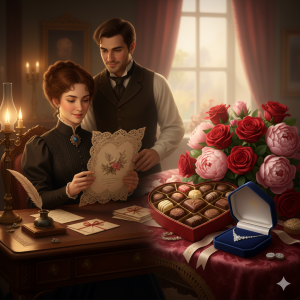
The Industrial Revolution brought another significant shift in the history of Valentine. Advances in printing technology during the 18th and 19th centuries made printed greeting cards accessible. By the mid-1800s, commercially produced Valentine’s Day cards were the talk of the town in Britain and other Western countries. These cards often featured romantic imagery, lace, and carefully composed verses. It standardised how affection was expressed with cards.
As the 20th century progressed, the celebration increased. With chocolates, flowers, and jewellery entering the picture of V-day, gradually becoming expected symbols of the day. Businesses recognised Valentine’s Day as an opportunity to market products tied to romance and affection. This period firmly established the modern rituals many recognise today, including the exchange of Valentine gifts as part of the celebration.
While some critics will argue that commercialisation has diluted the original meaning of the day, others see it as a natural evolution, an adaptation of tradition to contemporary lifestyles. The history of Valentine’s Day here reflects broader social changes, including consumer culture and changing norms around public expressions of love.
Valentine’s Day Beyond Romantic Love

One of the most notable changes in recent decades is how Valentine’s Day is no longer limited to romantic relationships. The history of Valentine’s Day in the 21st century shows a widening of its emotional scope. Today, the day is increasingly used to celebrate all forms of meaningful connection.
People now celebrate with Valentine cakes and give Valentins to family members, close friends, and even colleagues. Parents give small tokens to children, schools organise card exchanges, and friendships are acknowledged alongside romantic partnerships.
The use of terms like “Galentine’s Day” reflects a cultural shift toward inclusivity. Galentine’s is usually celebrated the day before Valentines’ day, i.e., 13th February. It is a day that celebrated the platonic friendship, recognising that love is not confined to couples. It originally started off as girl-friends coming together to appreciate each other. Galentine’s is a perfect example of how this expansion mirrors broader conversations about emotional well-being and appreciation. Valentine’s Day has become a moment to pause and acknowledge those who provide support, companionship, and care in everyday life.
The history of Valentine continues to evolve, adapting to more diverse definitions of love.
Cultural Differences and Global Celebrations

Valentine’s Day has changed through its global adaptation. While the day has Western origins, many countries have reinterpreted it according to their local customs. In Japan, it is the women who will give gifts to the man, with a reciprocal day in March. In parts of South America and certain parts of Asia, Valentine’s Day blends with existing festivals that celebrate friendship and affection.
These variations globally show us how the history of Valentine’s Day is not fixed but fluid. Every culture has added its own meaning, shaping how the day is observed and understood. Even within the same country, celebrations can differ based on age, community, and personal values.
What Valentine’s Day Represents Today?

Looking at how the day has changed over time, Valentine’s Day now represents a blend of tradition, commerce, and personal expression. Its ancient roots, religious associations, literary influences, and modern adaptations all coexist. The history of Valentine’s Day shows a steady movement from ritual and legend toward personal meaning.
For some, the day remains deeply romantic. For others, it is a simple reminder to express gratitude and affection. Its continued relevance lies in this flexibility, the ability to mean different things to different people without losing its core association with love.
Why Valentine’s Day Still Matters in a Changing World?
Valentine’s Day did not become what it is overnight. It evolved through centuries of cultural shifts, storytelling, religious influence, and social change. Valentine’s Day has evolved from ancient Roman festivals to medieval poetry, from handwritten notes to mass-produced cards. The history of Valentine’s Day reflects how societies express emotion and connection, and the future may have more to offer, as we have seen how it has evolved to become more expressive and inclusive.
Today’s celebrations, whether quiet or elaborate, romantic or platonic, are part of that long continuum. Understanding how Valentine’s Day has changed over the years adds depth to its modern traditions and reminds us that love, in all its forms, has always found new ways to be expressed.


